
Campus Hiring Solutions: How to Plan Fair, Scalable Graduate Recruitment
Campus hiring solutions: the short answer
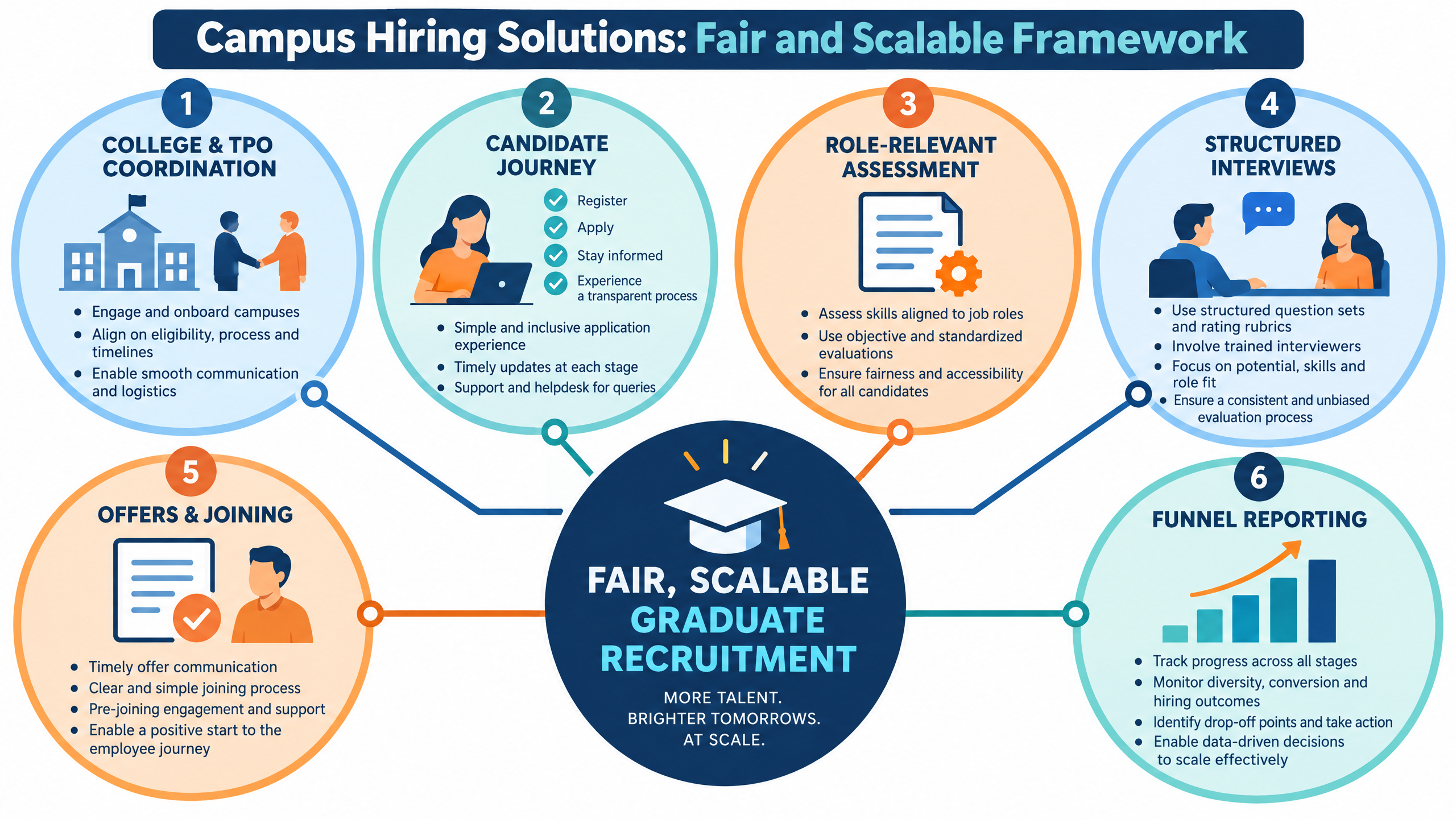
- Employer and role planning.
- College and Training & Placement Officer coordination.
- Student registration and eligibility.
- Assessments and shortlisting.
- Interviews and scheduling.
- Offers, documentation, and joining.
- Funnel reporting and continuous improvement.
What a fair, scalable campus hiring plan must solve
|
Planning question
|
Why it matters
|
|
How many hires and roles are required?
|
Determines college reach, capacity, and selection stages.
|
|
Which skills must graduates demonstrate?
|
Determines assessment and interview design.
|
|
Which colleges and programs are relevant?
|
Improves targeting and candidate-role fit.
|
|
Who owns TPO and student communication?
|
Prevents missed updates and unclear escalation.
|
|
How will candidates register and prove eligibility?
|
Reduces duplicate data and inconsistent filters.
|
|
What happens when volume peaks?
|
Protects assessment, interview, and support quality.
|
|
Who reviews borderline cases?
|
Adds accountable human judgment.
|
|
How will offers and joining be tracked?
|
Protects the investment made before selection.
|
|
Which metrics define a successful drive?
|
Enables improvement instead of anecdotal review.
|
The 9-step campus hiring solutions planning framework
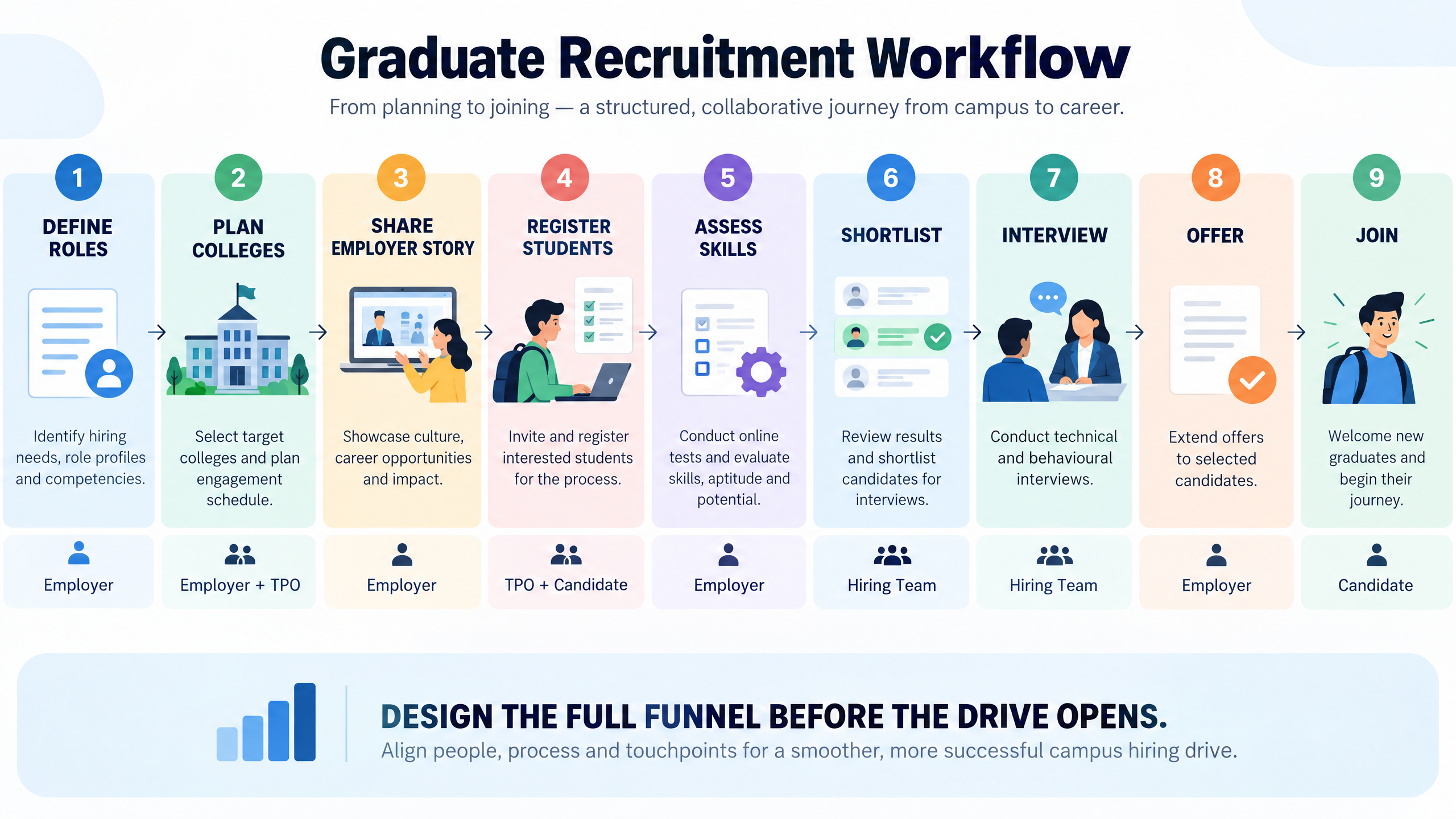
1. Define hiring outcomes and role requirements
- Required capabilities.
- Skills that can be trained after joining.
- Eligibility rules.
- Assessment stages.
- Interview competencies.
- Decision owners.
- Offer and joining conditions.
- Candidate communication commitments.
2. Build the college and TPO operating plan
- Target colleges and programs.
- TPO and placement-coordinator contacts.
- Drive calendars and deadlines.
- Candidate-list format.
- Required documents and consent.
- Communication owners.
- Escalation contacts.
- Rules for changes or late submissions.
3. Design a clear student and graduate journey
- Who the employer is.
- What the role involves.
- Which skills or eligibility rules matter.
- What each selection stage measures.
- How long each stage takes.
- Which devices or browsers are supported.
- How to get help.
- When the next update will arrive.
- What happens after completion.
4. Plan role-relevant assessments
- Aptitude and logical reasoning.
- Coding and technical fundamentals.
- Domain knowledge.
- Written communication.
- Situational judgment.
- Case or work-sample tasks.
- Video or structured responses.
- Which competencies does it measure?
- Which questions or tasks map to each competency?
- How is difficulty calibrated for graduates?
- What is the time limit?
- Which integrity controls are proportionate?
- What happens when a candidate faces a technical issue?
- Who reviews borderline results?
- How does the report support shortlisting?
5. Add structured interviews and expert capacity
- Internal interviews for product, team, or culture-specific judgment.
- Expert panels for technical depth and additional capacity.
- AI-supported interviews for suitable high-volume screening.
- Group discussions for structured teamwork and communication evidence.
- Video responses for early communication or presentation signals.
- Hybrid models that combine automated screening with human review.
6. Coordinate drive-day operations
- Final candidate list and eligibility status.
- Assessment and interview links.
- Time slots and panel assignments.
- Candidate reminders.
- TPO and recruiter contacts.
- Attendance process.
- Technical support route.
- Escalation rules.
- Cutoff and decision deadlines.
- Status-update templates.
7. Make decisions and communicate them clearly
- Assessment and interview evidence.
- Candidate status.
- Reviewer or panel feedback.
- Borderline-case review.
- Approval owner.
- Next action.
- Candidate communication status.
8. Manage offers, documentation, and joining
- Offer issued.
- Offer viewed.
- Offer accepted.
- Documents pending.
- Verification status.
- Joining confirmation.
- Competing-offer risk.
- Candidate questions.
- Withdrawal or deferral.
9. Report outcomes and improve the next drive
- Colleges contacted and participating.
- Registrations by college and role.
- Eligibility pass rate.
- Assessment start and completion rate.
- Assessment pass rate.
- Interview attendance.
- Interview progression.
- Offer rate.
- Offer acceptance rate.
- Documentation completion.
- Joining rate.
- Time from registration to decision.
- Candidate support volume.
- Drop-off by stage.
- Quality or rework signals.
Fairness controls for graduate recruitment
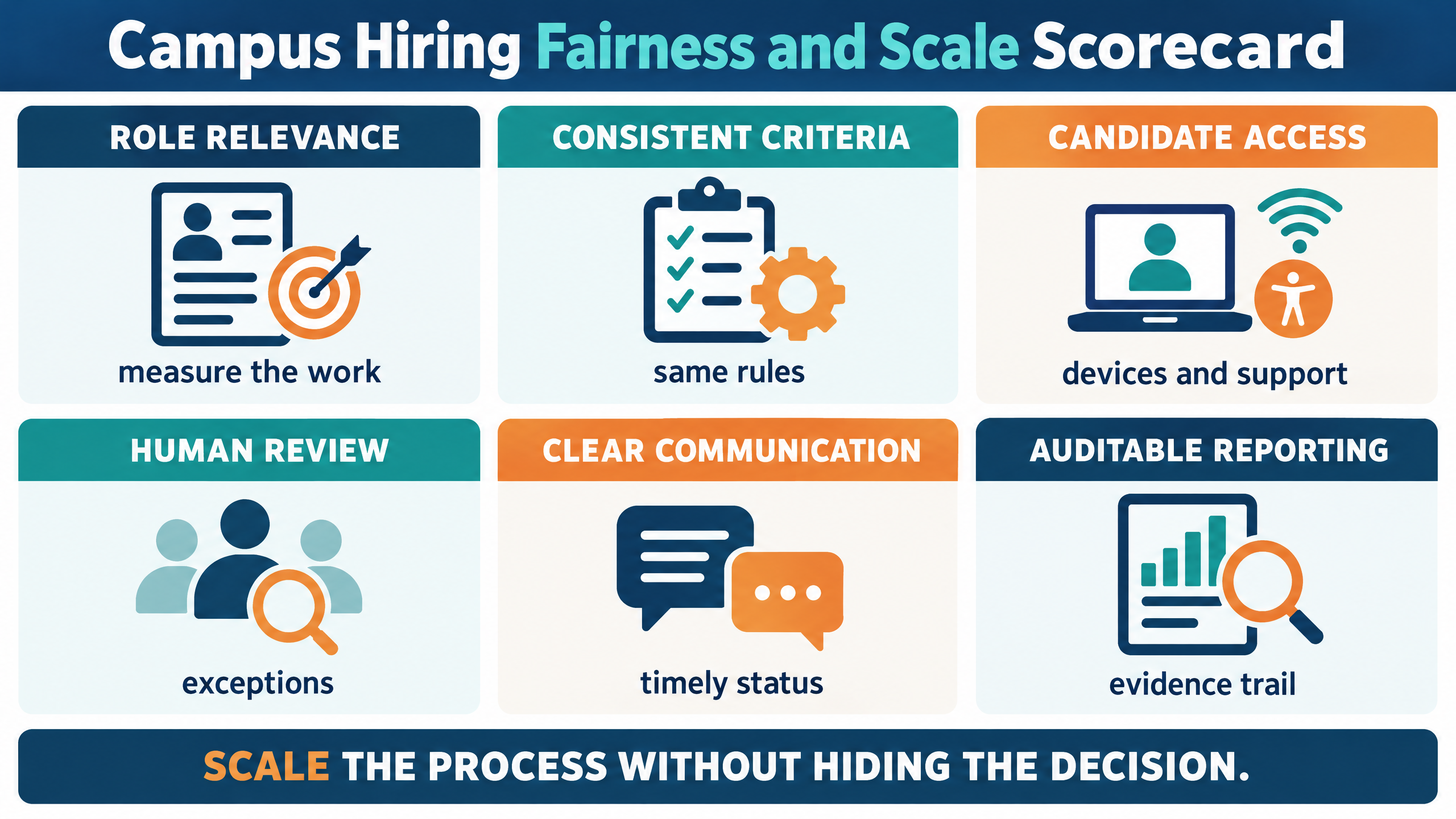
Use role-related criteria
Apply the same approved process
Provide accessible participation
Keep human review for exceptions
Make communication auditable
Review outcomes without overclaiming
How to choose a campus hiring solution
Evaluate the operating model, not just the software
|
Model
|
Best fit
|
What to verify
|
|
Self-serve platform
|
Internal teams with campus operations capacity.
|
Setup, user roles, assessment creation, reports, and support.
|
|
Managed campus hiring service
|
Employers facing high volume, tight drive windows, or limited coordination capacity.
|
College outreach, TPO coordination, candidate management, assessments, interviews, and reporting.
|
|
Hybrid model
|
Teams that own the hiring standard but need help with peak execution.
|
Handoff points, permissions, escalation, and quality controls.
|
Ask for a complete scenario demonstration
- Employer and role setup.
- College or TPO communication.
- Student registration and eligibility.
- Assessment creation and candidate invitations.
- Shortlisting and exception review.
- Interview scheduling and feedback.
- Offer and joining tracking.
- Funnel reporting.
Compare the total operating cost
- College and TPO coordination.
- Candidate-list cleanup.
- Candidate support.
- Assessment review.
- Interview scheduling.
- Panel capacity.
- Report preparation.
- Offer follow-up.
- Data reconciliation.
- Exception handling.
How futuremug fits the campus hiring model
- Target colleges and expected student volume.
- Role families and graduation years.
- Eligibility and assessment rules.
- Interview stages and panel requirements.
- TPO and student communication needs.
- Offer and joining timeline.
- Required dashboards and exports.
- Fairness and exception-review process.



Frequently Asked Questions
Campus hiring solutions are the processes, people, technology, and services used to manage graduate recruitment from college outreach through joining. They may include TPO coordination, employer branding, registration, eligibility, assessments, interviews, scheduling, offers, documentation, and reporting.
It should support role planning, college and TPO coordination, student registration, eligibility filters, assessments, shortlisting, interview scheduling, structured feedback, candidate communication, offer tracking, joining updates, and funnel reporting
Use role-related criteria, approved assessment templates, consistent eligibility rules, structured interview rubrics, clear candidate communication, accessible delivery, human review for exceptions, and auditable reporting. Automation should improve consistency without removing accountability.
Assessments help employers handle volume and collect early evidence of aptitude, coding, domain knowledge, communication, or other role-related skills. The assessment should be connected to the job and followed by a clear review and shortlisting process.
Either model can work. Internal interviewers provide product and team context. Expert panels add capacity and technical coverage. A hybrid model may use external support for early or peak-volume rounds while keeping final decisions with the employer.
Give TPOs a complete drive brief, one communication owner, clear deadlines, eligibility rules, candidate-list requirements, support contacts, and status updates. Record changes and exceptions in a shared workflow instead of relying on scattered messages.
Track college participation, registrations, eligibility, assessment completion, stage conversion, interview attendance, offers, acceptance, documentation, joining, time to decision, support volume, and drop-off. Interpret metrics in the context of role fit and campaign design.
Software gives the employer a system to configure and operate. A managed service may also handle college outreach, TPO coordination, candidate management, assessments, interviews, scheduling, and reporting. A hybrid model combines internal ownership with external execution support.
futuremug’s campus placement and hiring offering describes support across college coordination, employer branding, candidate screening, assessments, interviews, expert verification, scheduling, and reporting. Employers should request a program-specific discussion based on their roles, colleges, volume, timeline, and delivery model.