

How to Become a Freelance Technical Interviewer in India (and Get Paid per Interview)
What Does a Freelance Interviewer Do?
A freelance technical interviewer runs interview rounds on behalf of a company, usually over video. A typical interview looks like this:
- Before: read the job description and the candidate’s profile, and plan questions that match the role.
- During: run a 45–90 minute round of coding, system design, domain or problem-solving questions.
- After: score the candidate on each skill, write clear notes, and give a hire or no-hire recommendation.
You work through a platform that matches you with interviews in your field and handles scheduling, candidates and payment. You choose the time slots you’re available for.
Who it suits
- Senior engineers who want extra income outside working hours.
- Tech leads and managers who already interview at work and want more variety.
- Consultants and recently retired professionals who want flexible, skilled work.
- Anyone with deep expertise in a niche area, such as cloud security, SAP or data engineering, where expert interviewers are hard to find.
Who Can Become a Freelance Interviewer?
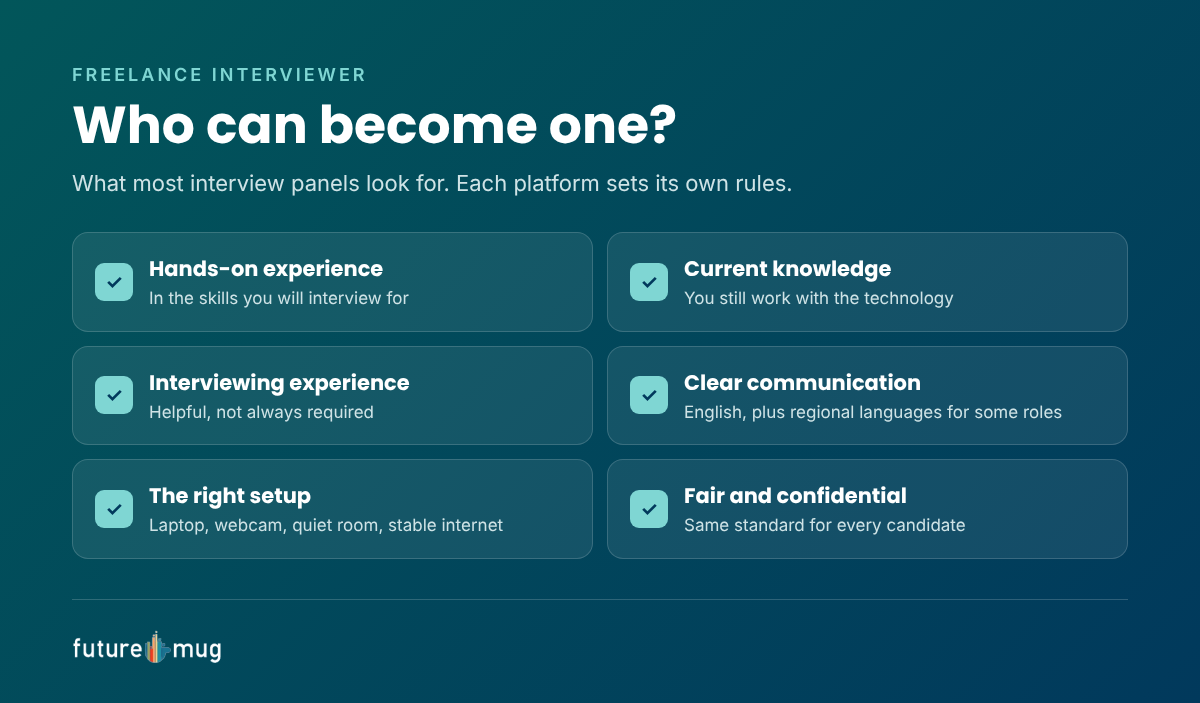
Each platform sets its own rules, but most interview panels look for:
- Solid hands-on experience in the skill you will interview for. Senior and niche roles need more.
- Current knowledge. You should still work with the technology, or have done so recently.
- Interviewing experience, such as running rounds at your own company. It helps but isn’t always required.
- Clear communication in English, plus regional languages for some roles.
- A quiet space, a laptop with a webcam and a stable internet connection.
- Fairness and confidentiality. You judge every candidate on the same standard and keep their details private.
How to Become a Freelance Interviewer in 7 Steps
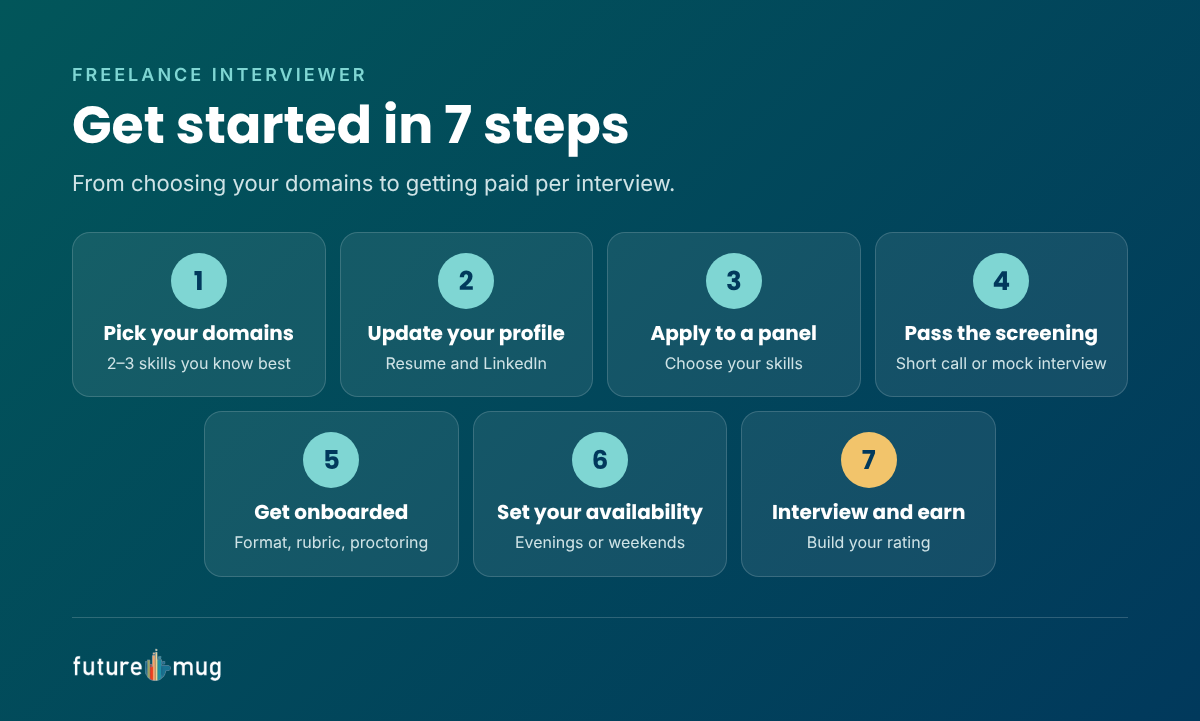
- Pick your domains. List the two or three skills you know best, such as Java backend, React, DevOps or data engineering. Panels match you to interviews by skill.
- Update your profile. Refresh your resume and LinkedIn with your current role, years of experience, tech stack and any interviewing you have done.
- Apply to an interview panel. Sign up with an interview-as-a-service platform and choose your domains.
- Pass the screening. Most platforms run a short call or mock interview to check your expertise and how you evaluate candidates.
- Complete onboarding. Learn the platform’s interview format, scoring rubric, proctoring tools and feedback template.
- Set your availability. Block slots that fit around your job, such as evenings or weekends.
- Run interviews and build your rating. Good feedback and on-time reports usually lead to more interviews.
How Freelance Interviewers Get Paid
Most platforms pay per completed interview, which includes submitting your feedback report. What you earn usually depends on:
- Seniority of the role. Interviews for senior and architect roles typically pay more than fresher rounds.
- Skill rarity. Niche skills, where expert interviewers are scarce, often pay more.
- Interview length and type. A 90-minute system design round takes more effort than a 45-minute screening round.
- Your rating and reliability. Interviewers with strong feedback and few cancellations tend to get more requests.
Payments are usually made monthly or after a batch of interviews, by bank transfer. Check each platform’s rate, payment cycle and cancellation rules before you join.
Taxes and Your Employer: What to Check
Income tax
Income from freelance interviewing is generally taxed as professional income, separately from your salary. Two points to know:
- TDS: platforms often deduct TDS on professional fees, typically at 10% once payments cross the yearly threshold. This was section 194J under the old Income Tax Act (ClearTax). You can claim this TDS when you file your return.
- Presumptive taxation: professionals with gross receipts under the limit have been able to declare 50% of receipts as income, without keeping detailed accounts. This was section 44ADA under the old Act (ClearTax).
The Income-tax Act, 2025 replaced the 1961 Act from 1 April 2026, and section numbers have changed (Income Tax Department). Check the current rules with a chartered accountant before you file.
Your employment contract
Many Indian IT companies have rules on outside work, known as moonlighting. Read your employment contract and HR policy before you start. Some employers require you to tell them about paid side work, or ask for approval. Never interview candidates for your own employer’s direct competitors if that creates a conflict of interest, and never use confidential information from your job.
Tips to Get More Interviews
The interviewers who get the most work do the same things well:
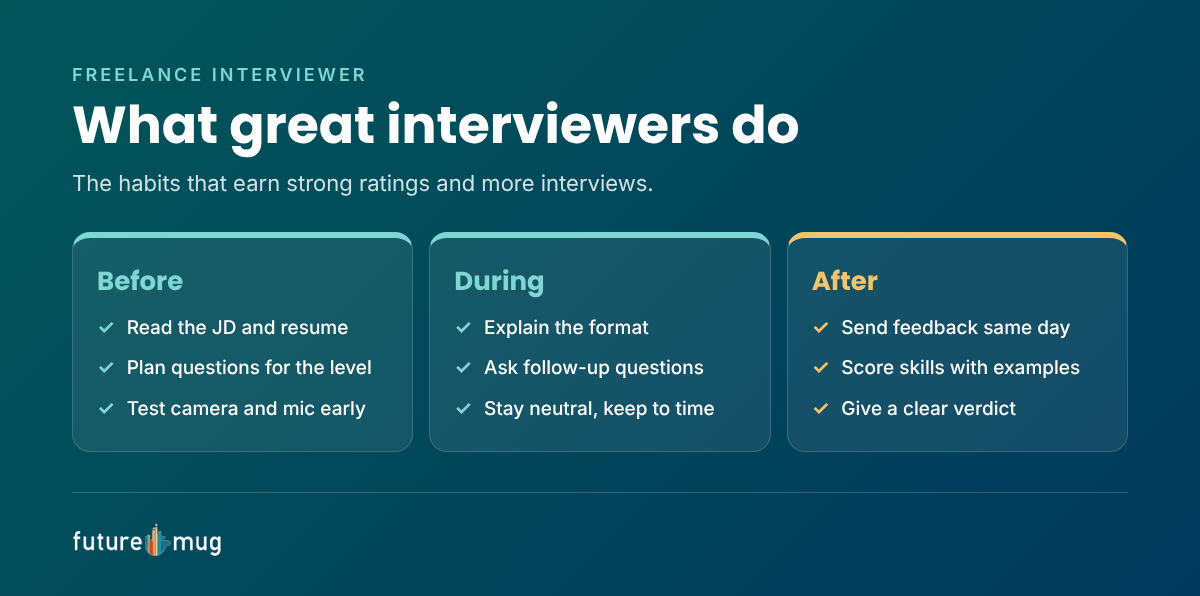
Before the interview
- Read the job description and the candidate’s resume.
- Prepare questions that match the role’s level, not puzzles for their own sake.
- Test your camera, microphone and connection 10 minutes early.
During the interview
- Introduce yourself and explain the format, so the candidate can relax.
- Ask follow-up questions to understand how they think, not just whether they know the answer.
- Stay neutral, keep to time, and watch for proctoring flags.
After the interview
- Submit feedback the same day.
- Score each skill with specific examples from the interview.
- Give a clear recommendation that the hiring team can act on.
Mistakes to avoid
- Accepting interviews outside your real expertise.
- Cancelling slots at the last minute.
- Writing vague feedback such as “good candidate” without evidence.
- Letting first impressions or a candidate’s college decide your score.
Join the futuremug Interview Panel
futuremug runs interview outsourcing for companies across India, with a panel of 5,000+ expert interviewers in 250+ IT domains. Joining the panel gives you:
- Interviews in your own domain, matched to the skills you choose.
- Flexible slots that fit around your job.
- Payment per interview for every completed interview and report.
- A clear format, with structured scorecards and proctored video interviews.
- Variety, with interviews for companies ranging from startups to large IT services firms.
Conclusion
Freelance interviewing is one of the most flexible ways for senior engineers in India to earn from their expertise. Pick your domains, join a trusted panel, check your employment contract and tax position, and build your rating with fair, well-documented interviews.
Apply to join the futuremug interview panel and start getting paid per interview.



Frequently Asked Questions
A freelance interviewer is an experienced professional who conducts interviews for companies on a flexible, per-interview basis, usually through an interview-as-a-service platform.
Choose the skills you know best, update your profile, apply to an interview panel, pass its screening, complete onboarding, set your availability and start running interviews.
Pay is usually per completed interview. It depends on the role's seniority, how rare the skill is, the interview's length and your rating. Check each platform's rates before you join.
Often, yes, since most interviews can be scheduled in the evenings or at weekends. But check your employment contract and HR policy first, because some employers restrict paid outside work.
Yes. It is generally taxed as professional income, and platforms may deduct TDS. India's Income-tax Act, 2025 took effect on 1 April 2026, so check the current rules with a chartered accountant.
It helps, but strong hands-on expertise matters most. Platforms usually train new interviewers on their format and scoring.