
AI Interviews Explained: How They Work and Why They’re Fair
Artificial Intelligence is transforming almost every aspect of recruitment, and interviews are no exception. As organizations receive thousands of applications for a single role and colleges prepare hundreds of students for campus placements, traditional interview methods often struggle to keep pace. Scheduling interviews, ensuring evaluation consistency, and providing timely feedback can become overwhelming for hiring teams.
This is where AI interviews are changing the recruitment landscape. By automating initial interview rounds, AI-powered interview platforms help organizations evaluate candidates more efficiently while maintaining consistency across every interview.
Despite their growing adoption, many HR leaders, Training and Placement Officers (TPOs), and candidates still wonder: How do AI interviews actually work? Are they fair? Can they accurately assess candidates?
Let’s explore how AI interviews function and why they’re becoming an essential part of modern hiring.
What Are AI Interviews?
AI interviews are structured interviews conducted through artificial intelligence instead of a human interviewer during the initial stages of recruitment.
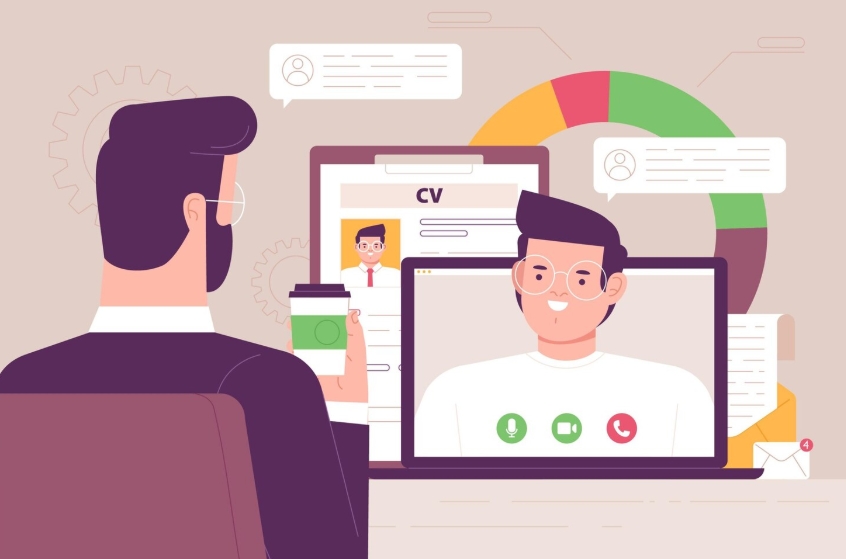
Candidates answer predefined questions using video, audio, or text responses. The AI platform records these responses and evaluates them based on predefined criteria set by the organization.
Depending on the platform, AI interviews may assess:
- Technical knowledge
- Communication skills
- Role-specific competencies
- Problem-solving ability
- Behavioral responses
- Interview completion metrics
Rather than replacing recruiters, AI interviews automate repetitive screening tasks, allowing HR teams to focus on qualified candidates.
Futuremug’s AI Interview as a Service helps organizations automate initial interview rounds while maintaining structured and consistent candidate evaluations.
How Do AI Interviews Work?
Although different platforms use different technologies, most AI interview systems follow a similar workflow.
Step 1: Candidate Invitation
Candidates receive an interview invitation via email or SMS with a secure interview link.
Unlike traditional interviews, candidates can often complete the interview within a specified time window, offering greater flexibility.
Step 2: Identity Verification
Many AI interview platforms verify candidate identity before the interview begins.
Verification methods may include:
- Face verification
- Identity document validation
- OTP authentication
- Webcam verification
These steps help ensure the correct candidate is taking the interview.
Step 3: Interview Questions
Candidates respond to a structured set of questions.
Depending on the hiring requirements, questions may include:
- Technical questions
- Coding challenges
- Situational scenarios
- Behavioral questions
- Communication assessments
Every candidate receives the same interview structure, helping standardize the evaluation process.
Step 4: AI-Based Evaluation
After the interview, the platform analyzes candidate responses based on predefined evaluation criteria.
Rather than relying on subjective opinions, AI measures consistency across all candidates using standardized scoring frameworks.
Recruiters receive structured reports that help prioritize candidates for the next stage of hiring.
Why AI Interviews Are Fair
One of the biggest misconceptions about AI interviews is that they automatically make hiring decisions.
In reality, reputable AI interview platforms assist recruiters by providing structured insights rather than replacing human judgment.
Here’s why AI interviews often improve fairness.
Every Candidate Receives the Same Questions
Traditional interviews may vary depending on the interviewer.
AI interviews ensure every candidate receives:
- The same questions
- The same interview duration
- The same evaluation framework
- The same assessment criteria
This consistency reduces variations between interview sessions.
Reduced Administrative Bias
Human interviewers may unintentionally evaluate candidates differently based on interview timing, workload, or inconsistent questioning.
AI interview platforms follow predefined evaluation processes, making early-stage screening more consistent across all applicants.
Final hiring decisions, however, should always remain with human recruiters.
Objective Skill Assessment
AI interviews evaluate responses against predefined competencies rather than relying solely on subjective impressions.
Organizations can configure interviews to assess:
- Technical competency
- Communication effectiveness
- Problem-solving ability
- Job-specific knowledge
- Behavioral responses
This structured approach improves transparency during candidate screening.
Benefits of AI Interviews
Faster Candidate Screening
Instead of scheduling hundreds of initial interviews manually, organizations can evaluate large candidate volumes simultaneously.
This significantly reduces screening time and improves recruitment efficiency.
Improved Candidate Experience
Candidates can complete interviews at convenient times rather than waiting for interviewer availability.
This flexibility improves accessibility and reduces scheduling conflicts.
Scalable Hiring
Whether hiring 50 candidates or 5,000, AI interviews maintain consistent evaluation standards.
This makes AI particularly valuable for:
- Campus recruitment
- Graduate hiring
- Volume recruitment
- Internship hiring
- Seasonal recruitment
Consistent Interview Quality
Every candidate experiences the same interview process, reducing inconsistencies that often occur with multiple human interviewers.
AI Interviews for Campus Placements
Educational institutions are increasingly adopting AI interviews to prepare students before recruiter interactions.
Benefits for colleges include:
- Standardized mock interviews
- Faster interview scheduling
- Detailed performance reports
- Better student readiness
- Reduced placement workload
Futuremug’s Campus Placement Platform integrates placement management with modern hiring tools, helping colleges prepare students more effectively for campus recruitment.
AI Interviews and Skill Assessments Work Better Together
AI interviews become even more effective when combined with structured online assessments.
Assessments evaluate technical knowledge, while AI interviews measure communication, reasoning, and interview readiness.
Futuremug’s Free Online Assessment Platform enables organizations and educational institutions to assess candidate skills before conducting AI-powered interviews.
Common Myths About AI Interviews
“AI Replaces Recruiters”
No. AI supports recruiters by automating repetitive screening activities. Final hiring decisions remain with HR professionals.
“AI Interviews Are Unfair”
Well-designed AI interviews evaluate every candidate using the same interview structure and predefined scoring criteria, improving consistency rather than reducing fairness.
“AI Interviews Only Measure Communication”
Modern AI interview platforms assess multiple competencies, including technical knowledge, behavioral responses, role-specific skills, and problem-solving ability.
Is AI Interviewing the Future?
AI interviews are becoming a standard part of modern recruitment because they solve challenges that traditional interviews struggle to address.
Organizations benefit from:
- Faster hiring
- Improved scalability
- Consistent evaluations
- Better recruiter productivity
- Enhanced candidate experience
As hiring volumes continue to increase, AI interviews will increasingly support—not replace—human recruiters by making recruitment faster and more structured.
Conclusion
AI interviews are not about replacing human decision-making—they’re about making recruitment more efficient, consistent, and scalable. By automating the initial stages of candidate evaluation, organizations can reduce hiring time while ensuring every applicant receives a standardized interview experience.
For HR leaders, AI interviews improve productivity and hiring efficiency. For TPOs, they provide students with valuable interview practice and measurable feedback before campus placements.
When combined with online assessments and structured recruitment workflows, AI interviews become a powerful tool for modern hiring, helping organizations identify qualified candidates faster while maintaining fairness throughout the recruitment process.
AI Interview: What is an AI Interviewer? Guide for 2026



Frequently Asked Questions
AI interviews are structured interviews conducted through artificial intelligence platforms that automate candidate screening using predefined questions and standardized evaluation criteria.
Yes. AI interviews provide every candidate with the same interview structure, questions, and evaluation framework, helping improve consistency during the screening process.
No. AI interviews automate early-stage screening, while recruiters continue to make final hiring decisions.
AI interviews reduce hiring time, improve scalability, standardize candidate evaluations, enhance recruiter productivity, and provide a better candidate experience.
Yes. Colleges can use AI interviews for mock interviews, placement preparation, and student readiness assessments before campus recruitment.