
How to Evaluate Ai Interview Platform for Faster Candidate Screening
What is an AI interview platform?

Why AI screening needs a careful evaluation
10 checks before selecting a platform
1. Define the screening job to be done
2. Check how questions are created
3. Evaluate role relevance
4. Review the candidate journey
5. Test voice, video, and coding capabilities
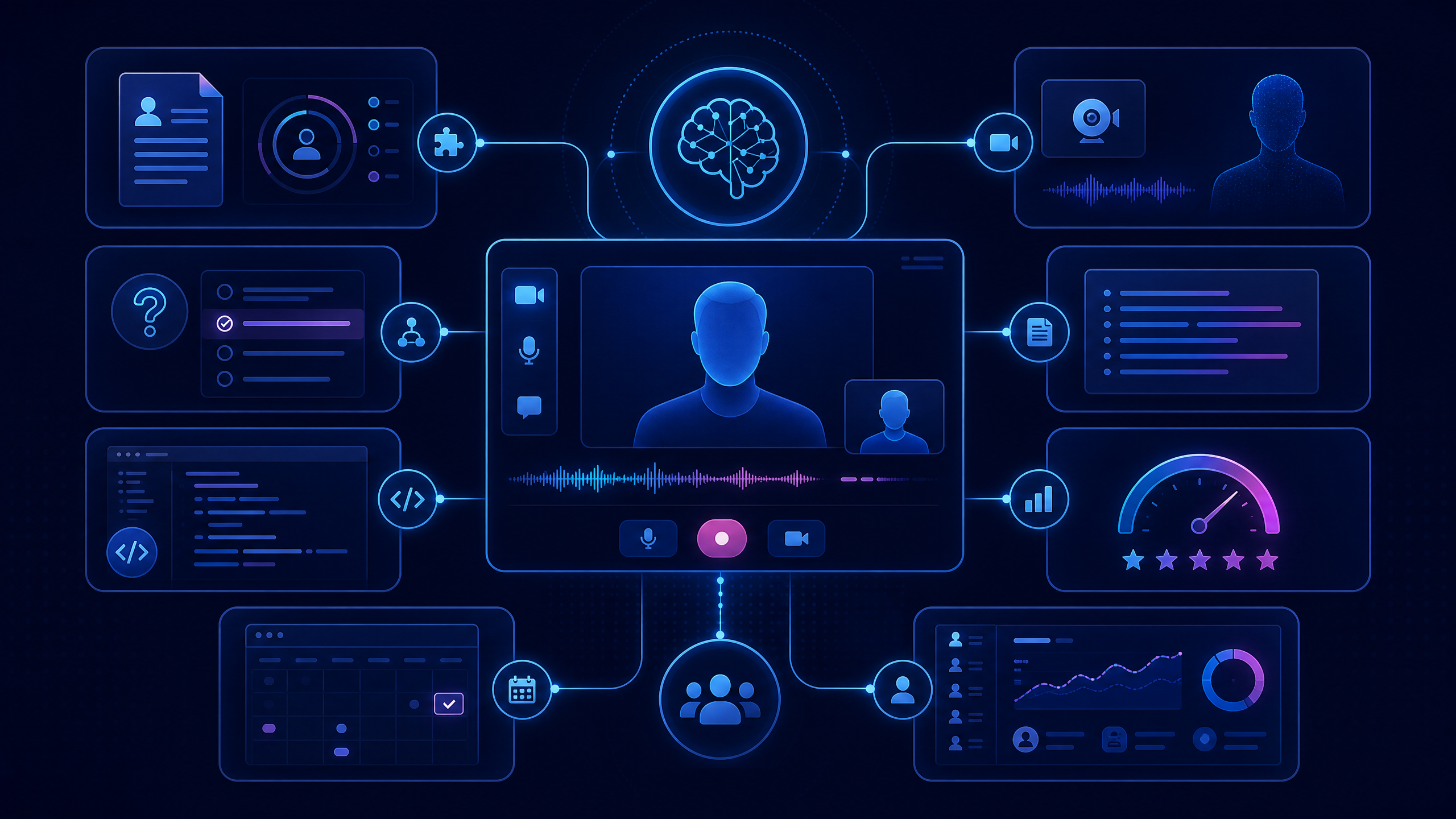
6. Understand the scoring model
7. Inspect transcripts, summaries, and reports
8. Verify integrations and workflow triggers
9. Evaluate scale and support
10. Review governance before deployment
How to assess AI interview quality
|
Pilot dimension
|
What to measure
|
|
Completion
|
Invitation opens, starts, completed sessions, and drop-off stage.
|
|
Speed
|
Time from invitation to report and time from report to recruiter decision.
|
|
Consistency
|
Whether candidates receive comparable questions and scoring treatment.
|
|
Evidence quality
|
Relevance of transcripts, summaries, scores, and supporting responses.
|
|
Human agreement
|
How often trained reviewers agree with or challenge the recommendation.
|
|
Candidate experience
|
Clarity, accessibility, technical issues, perceived fairness, and support requests.
|
|
Business outcome
|
Qualified candidates advanced, interview load reduced, and quality at later stages.
|
|
Risk signals
|
Complaints, false positives, false negatives, privacy incidents, or unexplained results.
|
Governance and human oversight
Governance questions for vendors
|
Area
|
Questions for the vendor
|
|
Purpose
|
What hiring decisions is the system designed to support?
|
|
Data
|
What candidate data is collected, stored, processed, and shared?
|
|
Consent
|
How are candidates informed about AI involvement and recording?
|
|
Retention
|
How long are recordings, transcripts, scores, and logs retained?
|
|
Access
|
Which users can view candidate data, override results, or export reports?
|
|
Fairness
|
How are potential disparities monitored and investigated?
|
|
Accuracy
|
How are transcription, question relevance, and scoring errors handled?
|
|
Human review
|
Where are mandatory human checkpoints configured?
|
|
Security
|
What controls protect accounts, integrations, recordings, and reports?
|
|
Redress
|
Can candidates request clarification, correction, or another review route?
|
AI interview platform use cases
High-volume first-round screening
Technical candidate screening
Graduate and campus hiring
Global and distributed recruitment
Interview capacity support
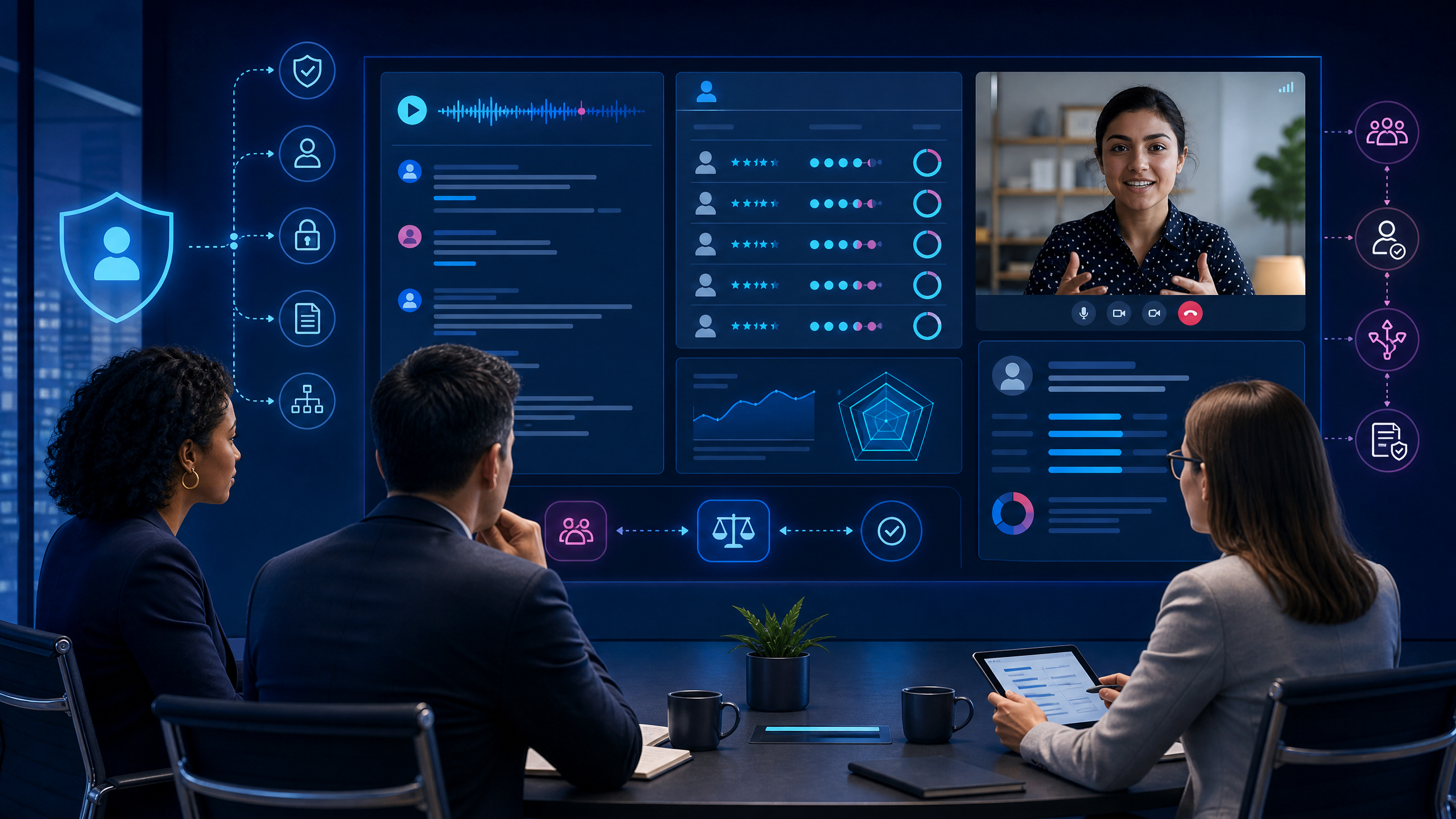
How futuremug approaches AI-enabled screening
Implementation plan
|
Phase
|
Action
|
Decision gate
|
|
1. Define
|
Choose roles, competencies, screening stages, owners, and success metrics.
|
Approved use case and risk boundary.
|
|
2. Configure
|
Set questions, rubrics, consent language, notifications, permissions, and review rules.
|
Test workflow ready.
|
|
3. Pilot
|
Run a representative candidate cohort and include edge cases.
|
Evidence on speed, quality, experience, and risk.
|
|
4. Review
|
Compare AI recommendations with trained human reviewers.
|
Human agreement and exception process documented.
|
|
5. Launch
|
Train recruiters, inform candidates, and establish support and escalation.
|
Go-live checklist approved.
|
|
6. Monitor
|
Track completion, overrides, complaints, disparities, errors, and later-stage outcomes.
|
Monthly governance review.
|
Request an AI interview platform demo



Frequently Asked Questions
It is used to automate or assist early-stage candidate screening through job-specific questions, text or voice interactions, video interviews, coding tasks, transcripts, summaries, structured scoring, and recruiter workflows.
It can reduce repetitive first-round work, but it should not automatically replace human judgment for consequential hiring decisions. Human interviewers and hiring managers remain important for technical depth, context, exceptions, final evaluation, and accountability.
Use your own job descriptions and competencies. Review question relevance, difficulty, prohibited topics, follow-up behavior, language, consistency, and human approval controls. Pilot the questions with qualified reviewers before production use.
Define mandatory review points, give reviewers access to responses and supporting evidence, allow overrides, document reasons, and create an escalation route for candidates or recruiters. Oversight should affect decisions rather than simply appear in a policy document.
Ask about consent, recordings, transcripts, retention, access control, model or scoring limitations, bias monitoring, security, integrations, incident response, candidate correction, human review, and deletion procedures.
No. Fairness depends on the job requirements, data, questions, scoring rubric, workflow, monitoring, and human review. A standardized process can improve consistency, but it still needs testing for unintended disparities and inappropriate proxies.
Yes, when the workflow includes relevant technical questions, coding or assessment capability, structured evaluation, and qualified review. Technical hiring teams should inspect the actual evidence behind scores rather than relying on a summary alone.
Request a complete scenario: upload a job description, generate or configure questions, invite candidates, run an interview, review the transcript and score, override a recommendation, export a report, and show the ATS or next-step integration.
Communicate clearly, keep the session relevant, provide device and time guidance, support accessibility, explain AI involvement, make recovery possible, offer help, and show candidates what happens after submission. Monitor drop-off by stage and investigate technical as well as content causes.