
How to Create Recruitment Employer Branding for a Stronger Recruitment Brand
Recruitment employer branding: the short answer
- What does the organization do?
- What work would I perform?
- Who would manage me?
- How could I grow?
- What does the hiring process involve?
- Will I be evaluated fairly?
- Will the organization communicate clearly?
- Is the opportunity consistent with the public promise?
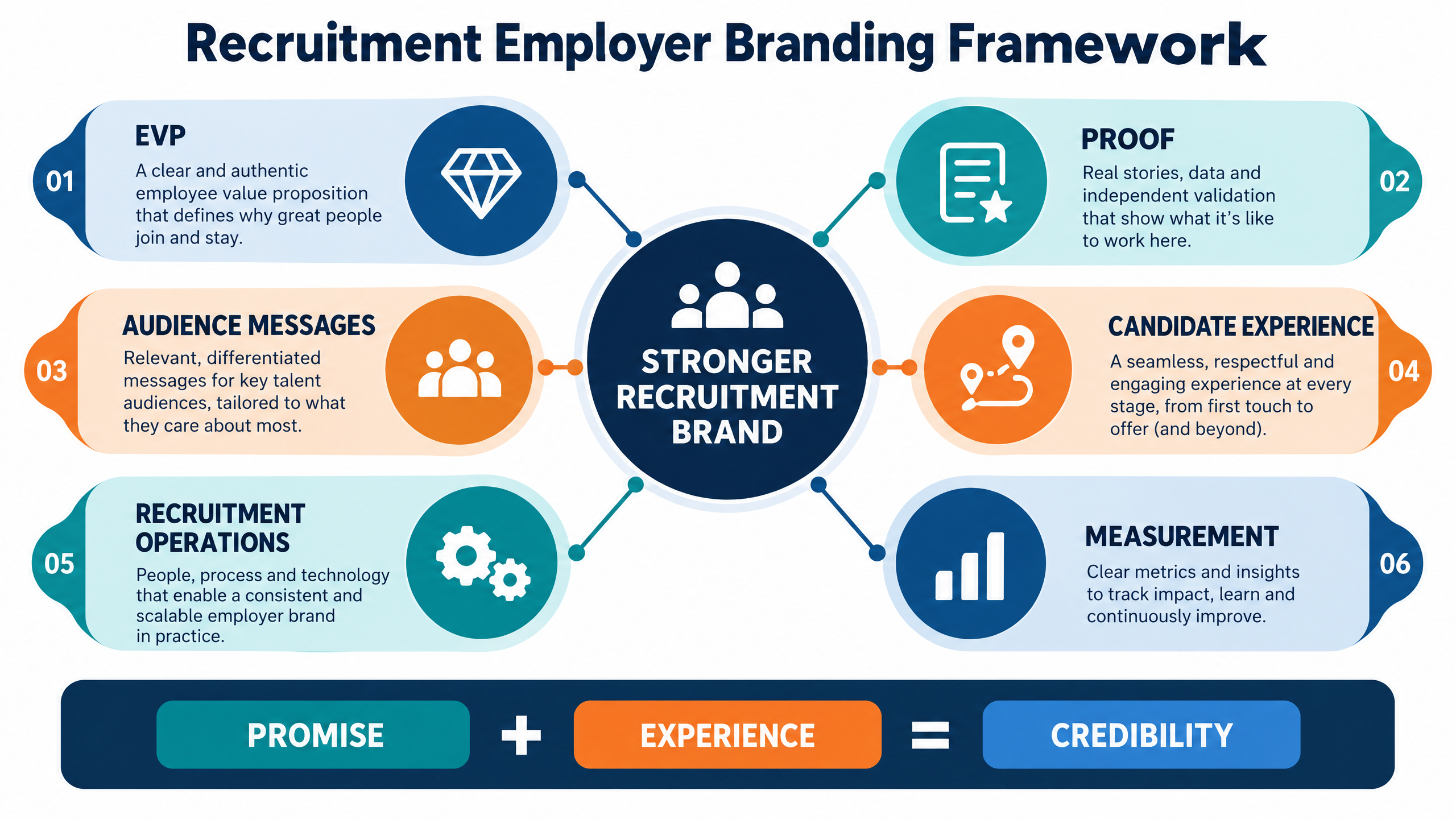
Why employer branding belongs in recruitment operations
The 9-step recruitment employer-branding framework
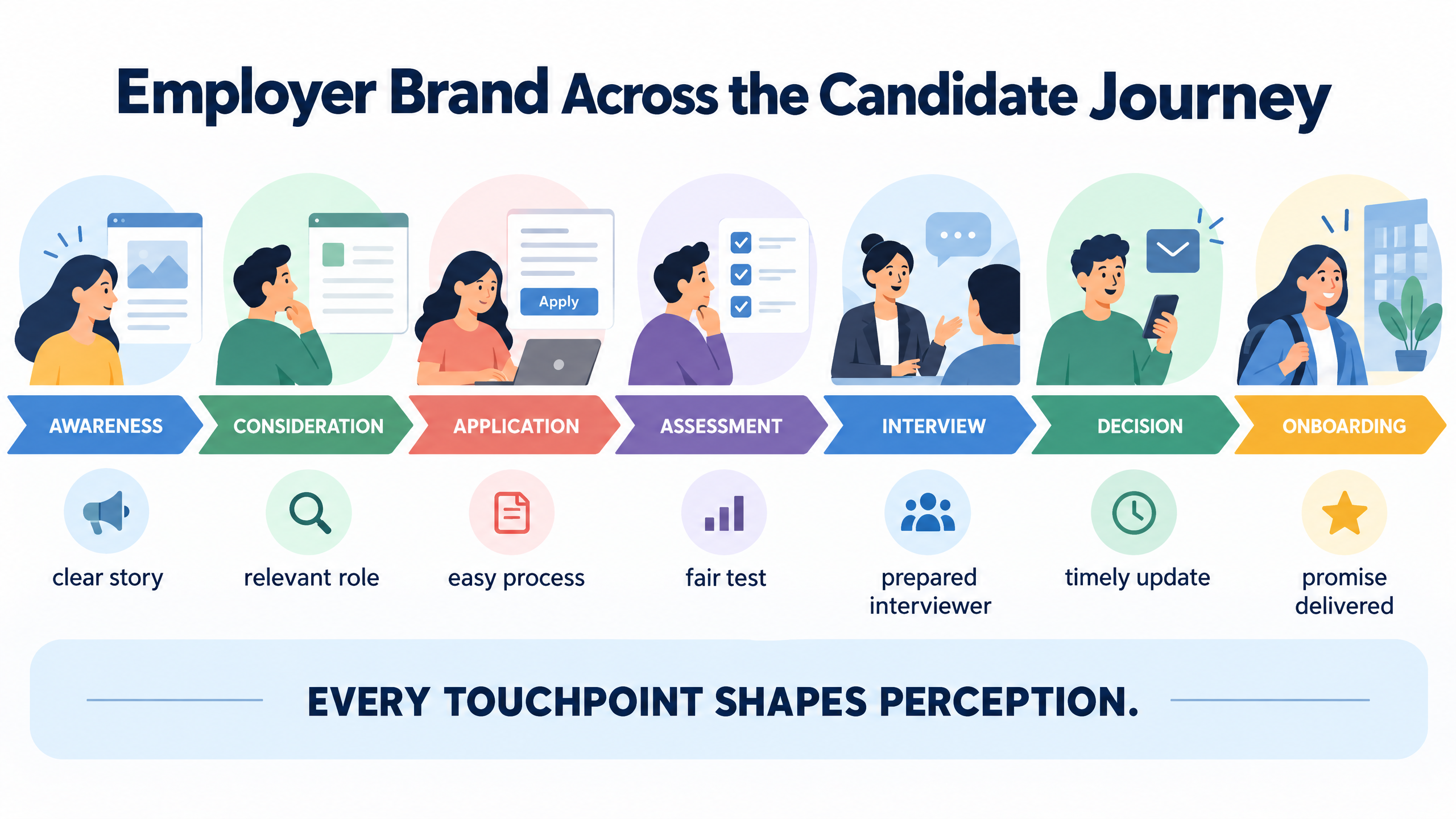
1. Define the recruitment problem
- Which role or talent segment is affected?
- Where does the candidate journey lose momentum?
- What perception needs to change?
- What proof would make the opportunity more credible?
- Which business outcome should improve?
2. Understand candidate and employee perception
- Candidate surveys and interview feedback.
- Offer acceptance and rejection reasons.
- Recruiter and hiring-manager interviews.
- Employee listening and exit feedback.
- Review-site themes.
- Careers-page and job-post behavior.
- Source quality and application conversion.
- Questions candidates ask repeatedly.
3. Create a specific employee value proposition
- The work and customer impact.
- Learning and career development.
- Manager support.
- Ways of working.
- Rewards and recognition.
- Inclusion and belonging.
- Team and community.
- Purpose and operating values.
4. Build a proof library
- Employee stories.
- Project outcomes.
- Customer impact.
- Learning journeys.
- Manager practices.
- Flexible-work examples.
- Inclusion initiatives.
- Community activity.
- Promotion or mobility stories.
- Candidate-process improvements.
5. Segment the employer-brand message
- Role family.
- Career stage.
- Location.
- Work model.
- Candidate motivation.
- Decision criteria.
- Talent-market challenge.
6. Make job content realistic and useful
- The role’s outcomes.
- Typical responsibilities.
- Team and manager context.
- Required and trainable skills.
- Work location and schedule.
- Learning and development support.
- Compensation or range where appropriate.
- Hiring stages and expected timeline.
- Accessibility or accommodation route.
- What may be challenging about the work.
7. Design a consistent candidate experience
- Application length and mobile usability.
- Clear instructions.
- Accessibility and accommodation.
- Response times.
- Assessment expectations.
- Interview preparation.
- Scheduling and reminders.
- Status updates.
- Rejection communication.
- Candidate questions and escalation.
8. Enable recruiters and interviewers
- Message guidance.
- Role-specific facts.
- Candidate-experience standards.
- Interview training.
- Structured evaluation rubrics.
- Escalation routes.
- Response-time expectations.
- Examples of respectful closing language.
9. Connect brand promises to hiring operations
|
Employer promise
|
Recruitment proof point
|
Operational test
|
|
“We move quickly.”
|
Clear stages and decision timeline.
|
Measure time between application, assessment, interview, and outcome.
|
|
“We value inclusion.”
|
Accessible content and relevant evaluation.
|
Test forms, assessments, scheduling, and accommodation support.
|
|
“We support development.”
|
Specific learning and manager examples.
|
Ask recruiters and interviewers to explain the development path.
|
|
“We respect people.”
|
Clear communication and professional interviews.
|
Track unanswered questions, missed updates, and candidate feedback.
|
|
“We use technology thoughtfully.”
|
Transparent, supported digital steps.
|
Provide human escalation and review automated outcomes.
|
How recruitment automation can strengthen the brand
- Candidate status updates.
- Interview scheduling and reminders.
- Assessment invitations.
- Frequently asked questions.
- Recruiter task routing.
- Candidate and interviewer notifications.
- SLA or response-time monitoring.
- Funnel reporting.
- Feedback collection.
How to measure recruitment employer branding
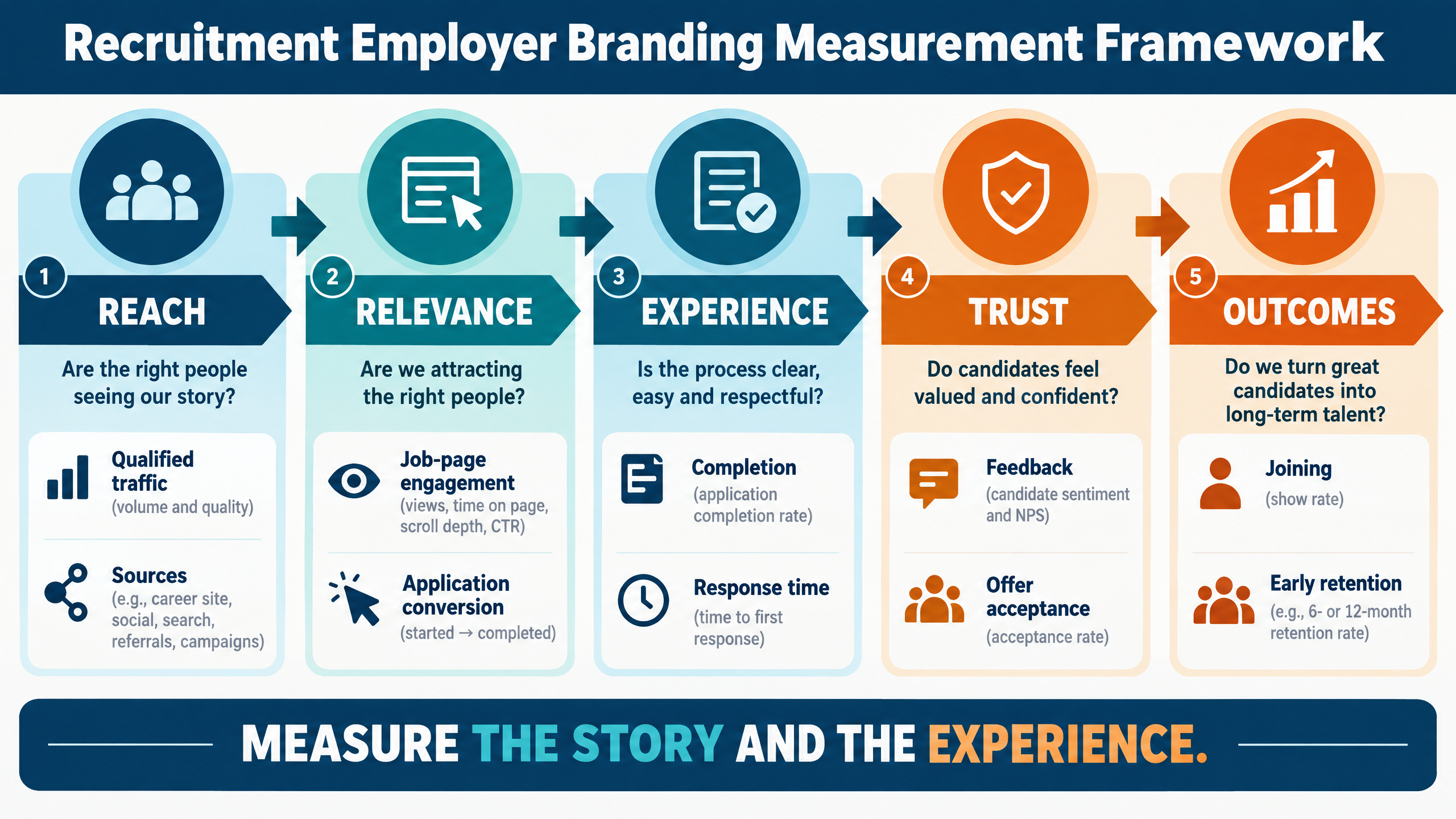
Reach and awareness
Relevance and consideration
Candidate experience
Trust and advocacy
Hiring outcomes
Common employer-branding mistakes
Treating employer branding as content production only
Promising a culture the process does not show
Using generic employee stories
Making every audience hear the same message
Measuring likes instead of hiring signals
Automating without a human route
How futuremug supports the recruitment workflow
- How a candidate receives role and process information.
- How screening or assessment instructions are delivered.
- How interviews are scheduled and rescheduled.
- How candidates receive status updates.
- How recruiters see delays or support requests.
- How human escalation works.
- How feedback and funnel metrics are reported.



Frequently Asked Questions
Recruitment employer branding is the strategy and operating practice used to shape how candidates perceive an organization throughout the hiring journey. It includes employer messaging, proof, job content, recruiter behavior, assessments, interviews, communication, offers, and onboarding alignment.
Employer branding covers the broader reputation of an organization as a place to work. Recruitment employer branding focuses on how that reputation is communicated and experienced during talent attraction, application, evaluation, selection, offer, and onboarding stages.
Employer-brand teams often lead the strategy, but recruitment employer branding is shared by TA, recruiters, hiring managers, interviewers, HR operations, communications, people leaders, and employees. The candidate experiences the combined system rather than one department.
An EVP should explain the value employees receive in exchange for their contribution. It can cover meaningful work, learning, leadership, rewards, flexibility, inclusion, belonging, community, and growth. The content should be specific and supported by evidence.
Candidate experience provides direct evidence of the employer promise. Clear communication, relevant evaluation, predictable timing, accessible steps, and respectful outcomes can build trust. Long delays, unclear requirements, and silence can weaken perception.
Yes, when it reduces avoidable friction such as missed reminders, unclear scheduling, repeated forms, and delayed status updates. Automation should include human escalation for exceptions, technical problems, accessibility needs, and sensitive questions.
Measure reach, relevance, application behavior, candidate experience, trust, advocacy, offer and joining outcomes, and early retention or attrition where appropriate. Combine quantitative signals with candidate and employee feedback.
Define the recruitment problem and compare the intended employer promise with the current candidate and employee experience. Then choose one role family, location, or talent segment for a focused pilot.
futuremug provides hiring workflow, assessment, interview, scheduling, reporting, and candidate-management capabilities that can support a more consistent recruitment experience. Teams should validate the fit against a real role, candidate journey, and internal operating model.