
What Is an AI Interview? How Agentic AI Interviews Conduct, Evaluate and Score Candidates Without Human Intervention
For many hiring teams, the phrase still sounds futuristic.
However, AI interviews are quickly becoming a practical solution to one of recruitment’s biggest challenges: evaluating large volumes of candidates quickly without sacrificing consistency.
Traditional interviews depend heavily on interviewer availability, experience, mood, and evaluation style.
Agentic AI interviews take a different approach.
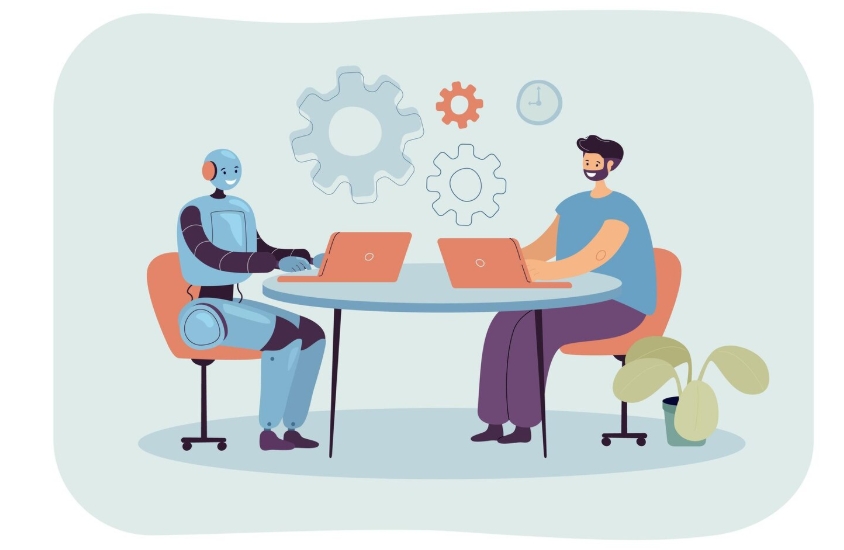
Instead of requiring recruiters or hiring managers to conduct every screening conversation manually, AI can now independently conduct structured interviews, evaluate candidate responses, and generate detailed hiring recommendations.
This allows organizations to scale hiring operations while maintaining a consistent candidate experience.
At Futuremug, Agentic AI Interviews are designed to function as intelligent evaluators that combine conversational intelligence, role-specific assessment logic, and structured scoring frameworks.
Why Traditional First-Round Interviews Are Breaking Down
Hiring volumes continue to increase across nearly every industry.
Recruiters often face:
- Hundreds of applications per role
- Limited screening capacity
- Growing pressure to reduce time-to-hire
- Candidate expectations for faster responses
- Increasingly specialized hiring requirements
Meanwhile, candidates experience:
- Scheduling delays
- Repetitive screening conversations
- Inconsistent evaluations
- Long hiring cycles
Traditional Screening Challenges
| Challenge | Business Impact |
|---|---|
| Recruiter bottlenecks | Slower hiring |
| Interview inconsistency | Unpredictable outcomes |
| Scheduling conflicts | Candidate drop-offs |
| Manual evaluation | Increased workload |
| Limited scalability | Hiring delays |
Organizations need a way to evaluate more candidates without proportionally increasing recruiter headcount.
How Agentic AI Interviews Actually Work
Unlike traditional interview automation tools, agentic AI interviews are not scripted questionnaires.
They operate as intelligent interview agents capable of adapting conversations based on candidate responses.
The process mirrors the structure of a professional interviewer.
Futuremug Agentic AI Interview Workflow
| Stage | Action |
|---|---|
| Candidate initiation | AI starts interview |
| Context gathering | Background analysis |
| Adaptive questioning | Dynamic interview flow |
| Response evaluation | Real-time assessment |
| Competency scoring | Structured evaluation |
| Report generation | Hiring insights delivered |
The result is an interview experience that feels conversational while remaining highly structured.
For organizations exploring modern AI hiring infrastructure, Futuremug’s Agentic AI Interview Platform provides scalable interview automation without sacrificing evaluation quality.
How AI Conducts an Interview Without Human Intervention
One of the biggest misconceptions is that AI interviews simply read questions from a script.
Modern agentic systems are significantly more sophisticated.
Candidate Introduction
The AI explains:
- Interview objectives
- Assessment structure
- Evaluation criteria
- Estimated duration
This establishes transparency from the start.
Dynamic Question Generation
Rather than asking identical questions to every applicant, the AI adjusts its approach based on:
- Candidate experience
- Previous responses
- Role requirements
- Demonstrated expertise
Example Interview Adaptation
| Candidate Response | AI Behavior |
|---|---|
| Strong technical answer | Increase complexity |
| Partial understanding | Probe deeper |
| Limited experience | Explore adjacent skills |
| Exceptional expertise | Advance to advanced topics |
This creates a personalized yet standardized evaluation experience.
How Agentic AI Evaluates Candidate Responses
Evaluation happens continuously throughout the interview.
The AI does not simply wait until the end to score performance.
Instead, it analyzes multiple dimensions simultaneously.
Evaluation Categories
| Category | Assessment Focus |
|---|---|
| Technical knowledge | Skill proficiency |
| Problem-solving | Analytical reasoning |
| Communication | Clarity and articulation |
| Decision-making | Thought process |
| Role alignment | Job suitability |
Unlike traditional interviews where notes may vary significantly between interviewers, AI uses predefined evaluation frameworks consistently across all candidates.
Real-Time Evaluation Process
The system continuously measures:
- Answer quality
- Response relevance
- Technical accuracy
- Communication effectiveness
- Competency indicators
This creates richer candidate insights than basic pass/fail screening.
How AI Scores Candidates Fairly and Consistently
One of the biggest advantages of agentic AI interviews is evaluation consistency.
Human interviewers naturally vary.
AI scoring frameworks remain standardized.
Traditional Interviews vs Agentic AI Scoring
| Traditional Interviews | Agentic AI Interviews |
|---|---|
| Subjective evaluation | Structured scoring |
| Variable questioning | Consistent frameworks |
| Different interviewer standards | Standardized criteria |
| Manual note-taking | Automated analysis |
| Limited comparison | Objective benchmarking |
Futuremug Scoring Framework
Candidate performance is evaluated across multiple dimensions.
| Scoring Area | Weighting Example |
|---|---|
| Technical competency | High |
| Problem-solving ability | High |
| Communication skills | Medium |
| Role fit | High |
| Overall recommendation | Final composite score |
Rather than relying on intuition, hiring teams receive structured assessment data that supports faster and more confident decisions.
Why Futuremug Agentic AI Interviews Are Different
Many AI interview tools focus primarily on automation.
Futuremug focuses on hiring accuracy.
Futuremug Agentic AI Interviews combine:
- Adaptive questioning
- Role-specific evaluation frameworks
- Real-time scoring
- Automated reporting
- Scalable interview infrastructure
Futuremug Agentic AI Advantages
| Capability | Business Benefit |
|---|---|
| Dynamic interviews | Better candidate evaluation |
| Role-specific assessments | Improved relevance |
| Automated scoring | Consistent decisions |
| Instant reporting | Faster hiring |
| High-volume scalability | Greater recruiter efficiency |
Unlike static screening systems, Futuremug’s platform is designed to assess candidate capability rather than simply collect responses.
Organizations looking to automate first-round interviews can leverage the Futuremug Agentic AI Interview Platform to create structured and scalable hiring workflows.
Business Benefits of Agentic AI Interviews
The value of agentic AI interviews extends beyond automation.
They create measurable operational improvements.
Hiring Outcomes
| Metric | Traditional Process | Agentic AI Process |
|---|---|---|
| Candidate screening speed | Moderate | High |
| Interview consistency | Variable | High |
| Recruiter workload | High | Reduced |
| Candidate coverage | Limited | Scalable |
| Reporting quality | Variable | Structured |
Benefits for Recruiters
- Reduced administrative workload
- Faster candidate screening
- Consistent evaluations
- Better hiring visibility
- Increased hiring capacity
Benefits for Candidates
- Immediate interview access
- Faster progression through hiring stages
- Consistent evaluation experience
- Reduced scheduling friction
- Greater transparency
The result is a more efficient hiring process for everyone involved.
Conclusion
When organizations ask “What is an AI interview?”, the answer has evolved significantly.
Modern agentic AI interviews are not simple chatbots or scripted questionnaires.
They are intelligent evaluation systems capable of conducting interviews, adapting questions, assessing competencies, scoring performance, and generating hiring insights without requiring a human interviewer in the room.
Futuremug’s Agentic AI Interview Platform takes this concept further by combining conversational intelligence with structured hiring frameworks designed specifically for modern recruitment.
As hiring demands continue growing, organizations that adopt agentic AI interviews gain a significant advantage in speed, consistency, scalability, and candidate experience.
The future of first-round interviewing is no longer manual.
It’s agentic, adaptive, and available on demand.