
AI Interview vs Human Interview Futuremug: What 800+ Clients Learned After Making the Switch
For years, technical hiring relied almost entirely on human interviewers.
Recruiters scheduled interviews.
Engineering managers blocked time on their calendars.
Senior developers paused product work to evaluate candidates.
This process worked when hiring volumes were manageable.
Today’s hiring landscape is different.
Organizations receive hundreds—or even thousands—of applications for a single technical role. At the same time, engineering teams are expected to deliver products faster than ever.
This shift has sparked an important conversation:
AI interview vs human interview Futuremug—which approach delivers better hiring outcomes?
The answer isn’t about replacing human decision-making.
It’s about using AI where it creates the greatest impact.
Futuremug’s Agentic AI Interview Platform helps organizations automate first-round interviews, standardize candidate evaluations, and enable hiring teams to focus on the final hiring decisions that require human judgment.
Why Companies Are Rethinking Traditional Interviews
Traditional interviews have several strengths.
Experienced interviewers can assess communication, collaboration, and team fit.
However, as hiring volumes increase, organizations encounter recurring challenges.
Growing Recruitment Challenges
| Challenge | Business Impact |
|---|---|
| High application volumes | Screening bottlenecks |
| Engineering interview fatigue | Reduced productivity |
| Scheduling conflicts | Longer hiring cycles |
| Inconsistent interviewer standards | Variable candidate evaluations |
| Limited interview capacity | Slower hiring |
As recruitment scales, interview quality often becomes harder to maintain.
AI Interview vs Human Interview: What’s the Difference?
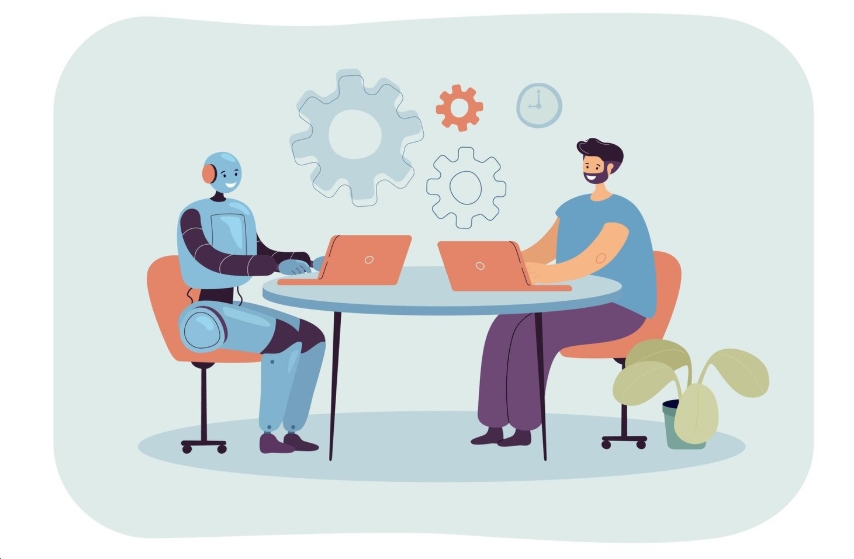
An AI interview and a human interview share the same objective—evaluating candidate suitability—but they differ in execution.
Human interviews rely on individual experience, questioning style, and availability.
Agentic AI interviews rely on structured frameworks, adaptive questioning, and automated evaluation.
AI Interview vs Human Interview
| Feature | Human Interview | Futuremug Agentic AI Interview |
|---|---|---|
| Availability | Limited to interviewer schedules | Available 24/7 |
| Interview capacity | Sequential | Parallel interviews |
| Evaluation consistency | Varies by interviewer | Standardized |
| Candidate scoring | Manual | Automated and structured |
| Interview reports | Written manually | Generated instantly |
| Scalability | Limited | Enterprise-ready |
The result is greater consistency without sacrificing evaluation depth.
The Challenges of Human-Led Technical Interviews
Internal engineering teams rarely struggle because they lack technical expertise.
They struggle because interviewing is not their primary responsibility.
Common Challenges
| Challenge | Result |
|---|---|
| Interview fatigue | Lower evaluation quality |
| Different questioning styles | Candidate inconsistency |
| Calendar conflicts | Delayed interviews |
| Manual documentation | Administrative workload |
| Engineering interruptions | Reduced development time |
As organizations grow, these inefficiencies become increasingly costly.
How Futuremug Agentic AI Interviews Work
Futuremug’s Agentic AI Interview Platform acts as an intelligent first-round interviewer.
Candidates receive interview invitations shortly after applying.
The AI conducts the interview, adapts follow-up questions based on responses, evaluates competencies, and generates a structured report for recruiters.
Futuremug Interview Workflow
| Stage | Outcome |
|---|---|
| Candidate applies | Interview invitation triggered |
| AI interview begins | Immediate engagement |
| Adaptive questioning | Personalized evaluation |
| Real-time assessment | Competency scoring |
| Interview report | Detailed hiring insights |
| Recruiter review | Shortlisted candidates progress |
Organizations can explore the platform here: https://futuremug.com/agentic-ai-interview-platform
AI Interview vs Human Interview Comparison
Rather than replacing human interviewers, Futuremug positions AI interviews as the most efficient way to handle early-stage evaluations.
Detailed Comparison
| Evaluation Area | Human Interview | Futuremug Agentic AI |
|---|---|---|
| First-round interviews | Manual | Automated |
| Candidate availability | Business hours | 24/7 |
| Interview consistency | Depends on interviewer | Standardized |
| Technical questioning | Manual | Role-specific adaptive questioning |
| Evaluation reports | Manual notes | Structured reports |
| Hiring scalability | Limited | High-volume capable |
| Candidate turnaround | Days | Minutes or hours |
Human interviewers remain valuable during final technical and culture-fit discussions.
AI handles the repetitive work at scale.
What Hiring Teams Experienced After Switching to Futuremug
Organizations implementing Futuremug typically report improvements in operational efficiency rather than changes to final hiring authority.
Before vs After
| Metric | Traditional Interviews | Futuremug AI Interviews |
|---|---|---|
| Interview scheduling | Manual | Automated |
| Recruiter coordination | High | Reduced |
| Candidate waiting time | Longer | Shorter |
| Engineering interview hours | High | Lower |
| Evaluation consistency | Variable | Standardized |
| Hiring throughput | Limited | Scalable |
Business Outcomes
Recruitment teams often experience:
- Faster first-round screening
- Reduced scheduling complexity
- Lower engineering interview workloads
- More consistent evaluations
- Improved recruiter productivity
- Better visibility into candidate performance
Hiring managers continue making the final hiring decisions with richer candidate insights.
Why Futuremug Delivers More Consistent Interviews
Consistency is one of the biggest challenges in recruitment.
Different interviewers naturally evaluate candidates differently.
Futuremug minimizes this variability through structured interview frameworks.
Futuremug Advantages
| Capability | Benefit |
|---|---|
| Adaptive questioning | Relevant candidate evaluation |
| Structured competency models | Consistent assessments |
| Automated scoring | Objective comparisons |
| Instant interview reports | Faster decisions |
| Parallel interview execution | High-volume hiring |
This enables organizations to compare candidates using common evaluation criteria.
When Should Companies Use AI Interviews?
Agentic AI interviews are particularly valuable for organizations that:
- Hire technical talent regularly
- Receive high application volumes
- Want faster hiring cycles
- Need standardized evaluations
- Want to reduce engineering interview fatigue
- Operate across multiple locations or time zones
They are especially effective during:
- Graduate hiring
- Campus recruitment
- Startup growth
- Enterprise hiring campaigns
- Global technical recruitment
Futuremug enables organizations to scale interviews without proportionally increasing recruiter or engineering workloads.
Conclusion
The debate around AI interview vs human interview Futuremug isn’t about choosing one over the other.
It’s about assigning each to the stage where it delivers the greatest value.
Human interviewers excel at evaluating leadership, collaboration, and organizational fit.
Agentic AI excels at conducting structured, scalable, and consistent first-round interviews.
Futuremug combines the strengths of both approaches by automating repetitive interview tasks while giving hiring teams richer insights for final decision-making.
For organizations looking to hire faster, improve interview quality, and scale technical recruitment without overwhelming internal teams, Futuremug’s Agentic AI Interview Platform offers a modern, intelligent solution built for the future of hiring.
Explore Futuremug Agentic AI Interview Platform:
https://futuremug.com/agentic-ai-interview-platform
AI Interview: What is an AI Interviewer? Guide for 2026



Frequently Asked Questions
A human interview is conducted by a recruiter or hiring manager, while an AI interview uses conversational AI to ask questions, evaluate responses, score competencies, and generate structured interview reports automatically.
AI interviews are best suited for first-round screening and technical evaluations. Human interviewers remain essential for final hiring decisions, leadership interviews, and culture-fit assessments.
Futuremug automates first-round interviews using adaptive AI that asks role-specific questions, evaluates candidate responses in real time, and generates detailed interview reports for recruiters and hiring managers.
Yes. Futuremug supports AI interviews for software engineering, DevOps, AI/ML, cloud, cybersecurity, data engineering, product, and many other technical roles.
Futuremug uses structured evaluation frameworks, competency-based scoring, adaptive questioning, and standardized reporting to ensure every candidate is assessed against the same hiring criteria.
Yes. Futuremug's Agentic AI Interview Platform is designed to conduct thousands of interviews simultaneously, making it ideal for startups, enterprises, and organizations hiring at scale.
Absolutely. Futuremug provides structured interview intelligence and candidate reports, but recruiters and hiring managers remain responsible for final hiring decisions.
Organizations adopt Agentic AI Interviews to reduce time-to-hire, increase interview capacity, improve evaluation consistency, reduce engineering workload, and create a better candidate experience.